YouTube marketing for the automotive industry: how to attract customers through organic traffic, advertising and collaborations with bloggers

The automotive niche is one of the most competitive and, at the same time, one of the most promising on YouTube. The high cost of reaching an audience, the lengthy decision-making process and the alarmingly low level of trust in sellers and service providers mean that video content is not just a useful tool, but practically essential. Below is a systematic breakdown of how to structure a YouTube marketing campaign for a garage, car dealership, car importer, tuning workshop or automotive media project.
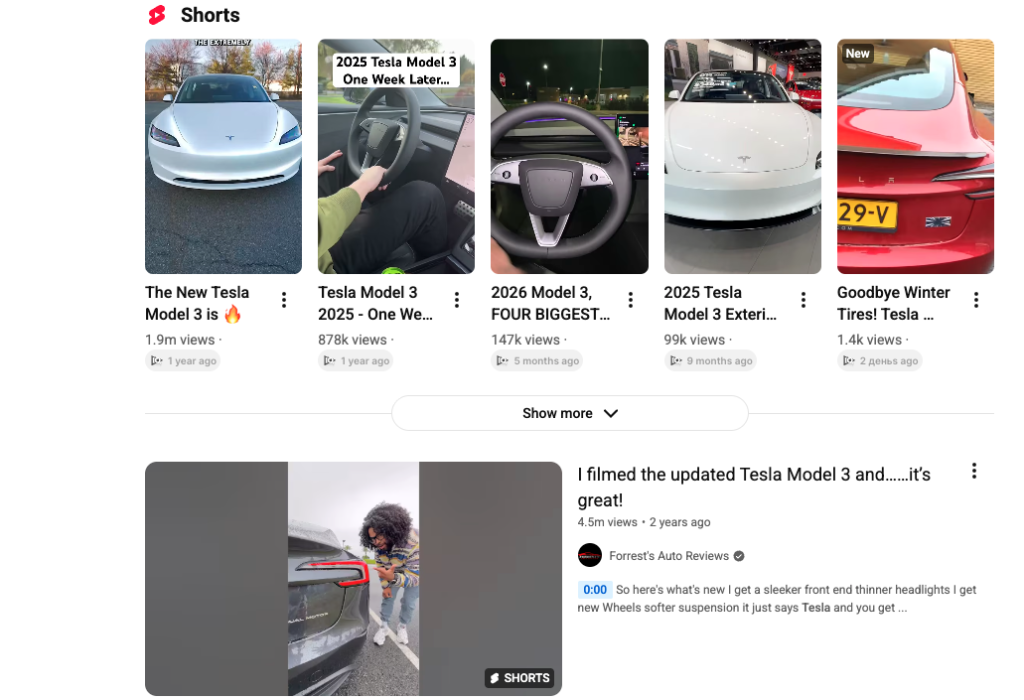
Who is this suitable for?
The strategies described in this article are applicable to a wide range of players in the car market:
- the import and sale of cars (including those imported from the US and Europe);
- maintenance and repairs;
- tuning and detailing;
- sale of spare parts;
- automotive media, IT products and the automotive information business.
The problems are similar for everyone: an oversaturated market, opaque pricing, the fear of being cheated by customers, the complexity of modern cars, and the high cost of traditional advertising. YouTube addresses most of these issues by demonstrating processes, providing honest reviews and sharing genuine customer feedback.
Фундамент: стратегия Hero – Hub – Help – Hype – Action
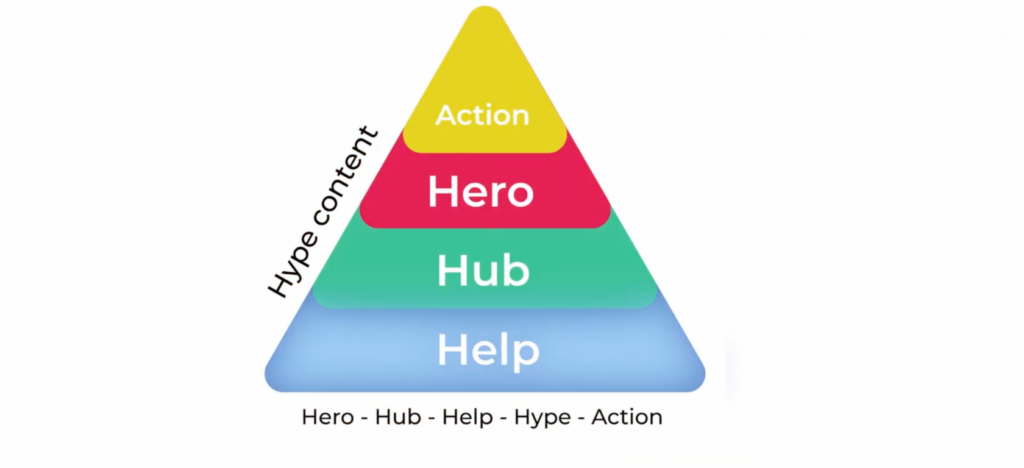
Google set out this content model back in 2020. It outlines the types of videos that should feature on a channel and in what proportions. It works particularly well for the automotive industry.
Help content – the backbone of the channel
This video is tailored to a specific search query. One video, one query. ‘How to check a car before buying’, ‘Tesla battery repair’, ‘what is customs clearance’ – these are topics that are relevant today and will remain so in three years’ time. Videos like these generate free traffic from YouTube and Google searches for months on end, even if the channel isn’t updated for a while.
The main drawback of help content is that once someone has found the answer, they leave. To keep them on the channel, you need the following type of content.
Hub content – serialised content designed to retain readers
These are the regular features that keep viewers coming back. Playlists dedicated to specific makes – BMW, Mercedes, Tesla. A separate series on car tuning, and another on sound systems. Weekly car market news, reviews of newly arrived lots, the ‘Car of the Week’ feature, customer stories – all this is Hub. The format is flexible; the structure depends on the specifics of the business.
Hero content – large-scale projects
Production takes weeks or months. A full car restoration, a tuning project from the moment the car arrives to the final result, an extensive test drive, and a collaboration with a major motoring blogger. This type of content requires significant resources, but creates a strong brand image and a high CTR thanks to storytelling and visuals. Live streams answering subscribers’ questions are a more accessible version of the Hero format; one or two a month is sufficient.
Trend-driven content – Shorts as a standalone tool
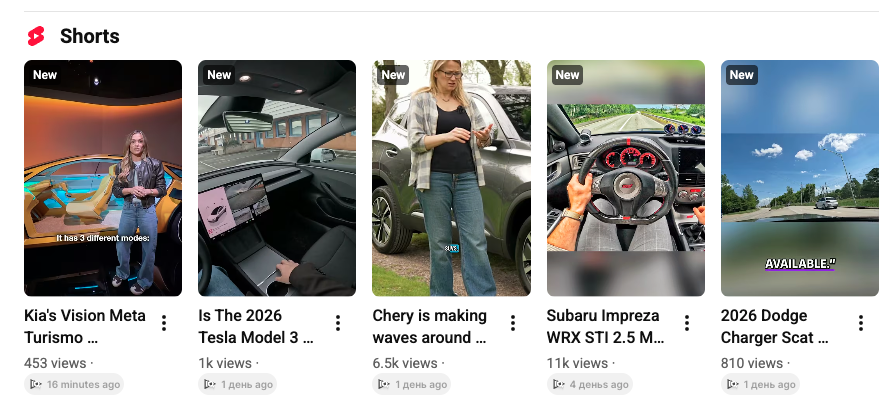
YouTube Shorts appear in global search results, reach a wide audience and often rack up hundreds of thousands of views. But there is one key point to bear in mind: publishing Shorts as standalone pieces of content is not very effective. Shorts should lead the viewer to a full-length video.
A real-life example: the video racked up 98,000 views, half of which came specifically from Shorts. This is no coincidence – it is the result of a carefully planned strategy. When the script for the main video is developed with future Shorts clips in mind, the transitions between formats flow naturally.
An added bonus: you can post the same Shorts on TikTok, Instagram Reels and Facebook – without having to film anything extra.
Action – paid advertising as the final stage of the sales funnel
If organic content does not convert directly, the audience is added to a remarketing list and a specific offer is shown to those who have already engaged with the channel. This is targeted work with a warm audience, rather than cold traffic.
The YouTube sales funnel in the motoring niche: from views to sales
The customer journey looks like this:
- Awareness. Shorts, reactions to market news, shock content featuring glitches – wide reach, first point of contact.
- Reviews. In-depth analytical videos, detailed analyses of faults, and reviews of specific models.
- Activation. Redirecting the audience to Telegram or a messaging app for quotes on repairs, advice and car selection.
- Conversion. Signing a contract for a test drive, purchasing from a car lot, booking an expensive service.
- Retention. Community channel, daily round-ups of great deals, and exclusive discounts for subscribers.
Content map by niche
What to film in the Help format
- Guides for beginners: how to choose a car, how to check a car before buying it.
- Analysis of typical faults in specific makes.
- Explaining complex terminology in simple terms.
- Answers to questions about customs clearance, registration and insurance.
- Electric car maintenance: consumables, charging tips, and operational considerations.
What to film in the Hub format
- Car market news – a weekly feature.
- Analysis of prices on the secondary market and at auctions.
- Car reviews are available.
- Client stories and project results.
What to film in Hero format
- Extensive test drives and technical analyses.
- A complete restoration or tuning project from start to finish.
- Collaborations with well-known motoring bloggers.
- Unique projects: a Tesla convertible, building a custom car.
What to film in the Hype/Action format
- Reactions to high-profile news stories: crash tests, product recalls, market scandals.
- An overview of promotions, discounts and special offers.
- The history of the company or the craftsman.
Monetisation and return on investment
The motoring niche is one of the most valuable in terms of audience on YouTube. Once you reach 1,000 subscribers and 4,000 hours of watch time, the platform begins to show adverts in your videos and share the revenue with you. In practice, for channels in this niche, breaking even – covering production and running costs – is a realistic prospect as early as the fifth month of operation. The niche’s broad audience allows channels to rack up hundreds of thousands or even millions of views, something that is out of reach for most highly specialised business channels.
When selling exclusive or high-end cars, the payback period can extend to 9 months – due to the lengthy sales cycle. This is normal and predictable.
Three marketing strategies: choose the one that suits your resources
Strategy 1. A fully-fledged channel with organic growth
Minimum posting frequency: one full-length video per week plus 15 Shorts per month. If you’re starting out in a highly competitive environment, aim for two full-length videos per month and between 15 and 30 Shorts. Once you’ve built up 1,000–2,000 followers, start adding live streams – at least once a month.
This is an investment model: after 3–6 months, the revenue generated by viewers coming from YouTube begins to cover the costs of filming, editing and running the channel.
Strategy 2. Minimal production – maximum Shorts
For those who aren’t ready to produce videos on a regular basis. You film 1–2 expert videos, each 3–6 minutes long, which identify the client’s pain points, offer a solution and showcase a case study. These videos are uploaded to YouTube as anchor content. Shorts are then edited from them, which direct the viewer back to the main video.
It is technically possible to clone a voice and create an avatar – without the need for additional filming. These same Shorts are published on TikTok, Instagram and Facebook, ensuring cross-platform reach.
Strategy 3. Working with bloggers
There are two options. The first is collaborations: you approach bloggers who already have an established audience, create joint content with them, or take part in live streams. Some of the trust that the blogger’s audience has in them is transferred to you – this works faster than building that trust from scratch.
The second option is buying ad space: a pre-roll advert or a special campaign dedicated entirely to your product. People see a specific offer and are directed to your website, chatbot or app. This is ideal for those who need leads straight away, without having to wait for organic growth.
Paid advertising on YouTube: an underrated channel
Most competitors in the automotive sector run adverts on Facebook and Instagram. Very few do so on YouTube. This means there is little competition for the audience’s attention and the cost per impression is relatively low. The approach is simple: an advert with a clear call to action, targeted at the right audience, driving traffic to a landing page or via a messaging app.
An important limitation: if you operate in a niche market, your audience size is finite. Paid advertising delivers quick results, but without organic traffic, growth comes to a standstill. Both tools work best when used in combination.
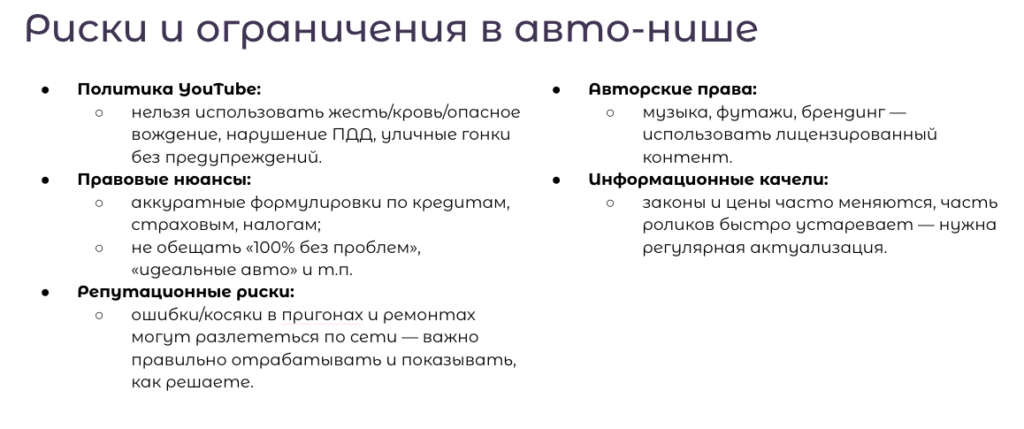
How to set up a production team: a practical guide
Regardless of the strategy chosen, the content production process follows the same logic.
- Identify who will be filming. Whether it’s the owner, an employee, a few members of the team or a hired corporate blogger – there are specialists on the market who know their cars and are willing to appear on camera regularly.
- Organise the shoot location. An office studio, a home studio, a rented studio in the city, or an on-location shoot – the format is chosen to suit the circumstances. The equipment is selected to suit the specific space.
- Develop core storylines. An outline for each video – not a word-for-word script, but a structure: what to talk about, where the hook will be, where to keep the viewer engaged, and where to take clips for Shorts. This is a key stage: YouTube promotes content that holds the viewer’s attention, rather than simply filling time.
- Editing and quality control. The technical specifications for editing are set out in advance. The finished video is checked before publication – YouTube requires compliance with its guidelines, and the quality of the content directly affects its promotion.
- Publishing and optimisation. A cover image featuring an expressive facial expression (such previews generate a high CTR), a title incorporating a search query, a description, tags, hashtags, and internal links between videos and to external resources.
Once the channel is up and running, day-to-day operations begin: regular video releases, analytics, and adjustments to topics and formats based on the results. Scaling is achieved through advertising with bloggers, collaborations, translating the channel into other languages, and cross-platform publishing.
Where to start right now
If you don’t have a channel yet, you’ll need a content strategy or at least a content plan. If you already have a channel, you’ll need an audit to identify areas for growth: what’s preventing you from gaining views, which topics are under-exploited, and where you’re losing your audience. This is the starting point for any form of collaboration.
The automotive niche offers a rare combination: a high-value audience, evergreen search traffic and a genuine opportunity to recoup production costs through channel monetisation. Not every business can afford this. The automotive industry, however, has this opportunity.